Joe Fox, Outdoor Recreation Manager, Northern Forest Center
This blog is the first in a multi-part series exploring the many factors that go into building mountain bike trails that are not only fun to ride, but that can withstand heavy use and increasingly frequent extreme weather events.
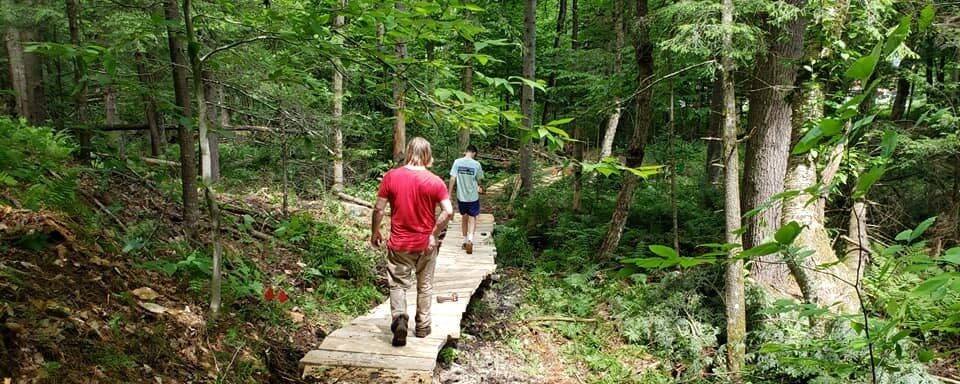
In my role at the Northern Forest Center, I’ve had the distinct pleasure of assisting communities and non-profits from northern Maine to the Adirondacks with a myriad of recreational trails-based projects, including helping groups find funding for the designing, building, and maintaining of recreational trails. An integral part of that work has been helping to advocate for and provide shared learning opportunities about best practices in “sustainably built” or “climate resilient” trails.
We wanted to share this knowledge through a blog series, first defining why sustainable trails are important and exactly what we mean by that term, before diving into how these trails are designed and built.
Let’s start with why.
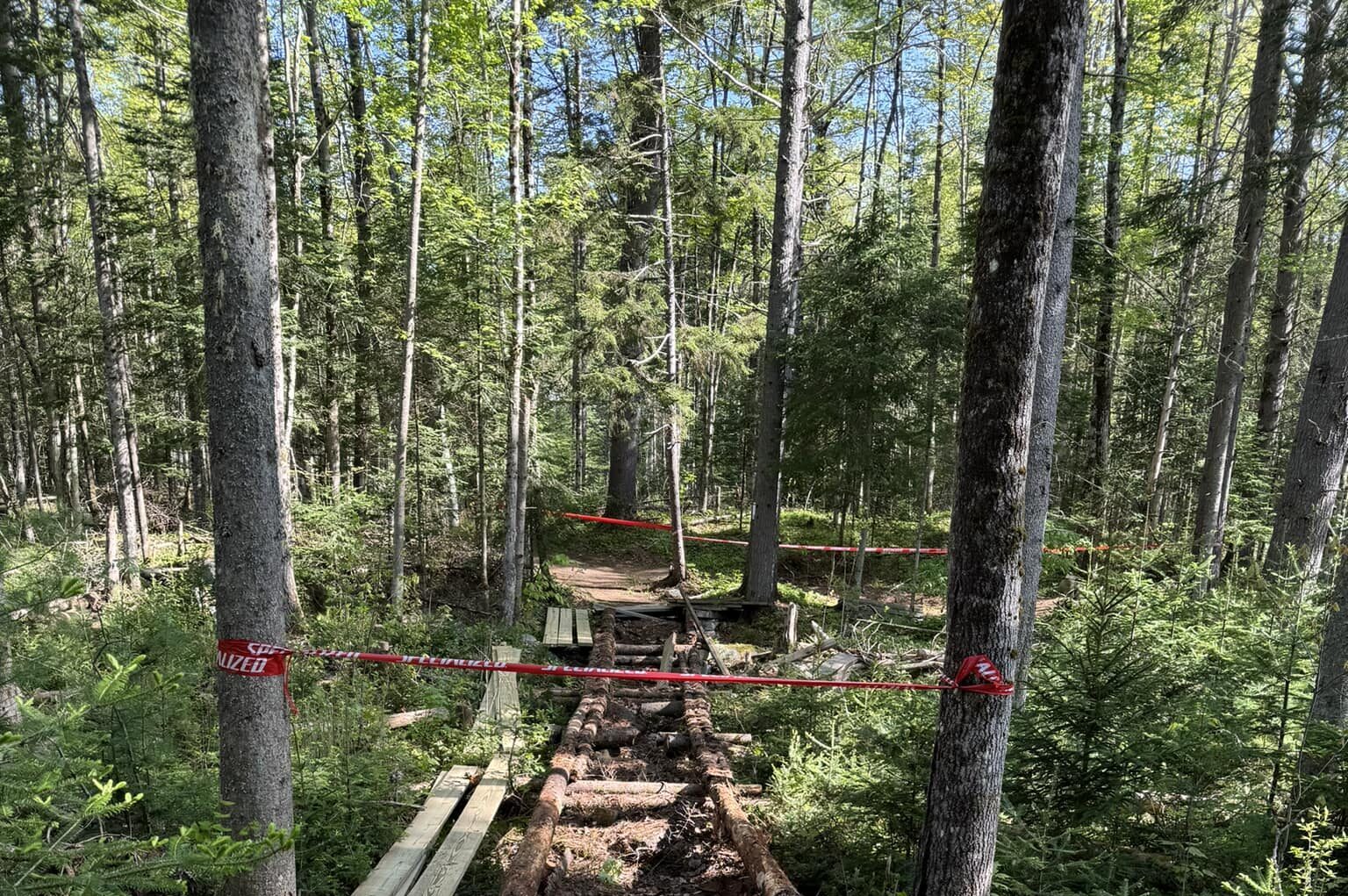
Not to be the King of Obvious, but most trails are located in hilly terrain and, in this region, most mountain bike trail tread surfaces consist of dirt or organic material. Where there is ledge for tread surfaces, water can often accelerate quickly down the slope and erode the soil below a rock feature where the tread surface returns to soil if proper water management practices aren’t put into place. Now factor in humans on bikes with knobby tires going down those slopes, a few extreme weather events over the course of a season (like a rapid snowmelt in the spring or weeks on end of torrential rain), and without responsible trail design elements put into place, what might be a fun trail to ride down can quickly turn into what was a fun trail to ride down, with topsoil running downstream and harming water quality and aquatic habitat.

Beyond the environmental impacts that poorly designed trails and poorly built trails can create, badly eroded trails can be dangerous to ride and both expensive and time consuming to repair.
To further drive home the importance of using best practices in trail design and construction, parts of the Northern Forest – like my home in Vermont’s Northeast Kingdom – have experienced several “100-year floods” in just the past few years. (It is worth noting that the term “100-year flood” doesn’t mean a flood of that intensity will only happen once in a hundred years, it has to do with historical probability, meaning that there is a 1 in 100 chance of a flood of a certain level happening each year. Learn more about flood terminology from the USGS here.)
According to Vermont Governor Scott’s office, last year’s July flooding event generated “more than one billion dollars in response, recovery, and social support costs. Most repairs to that damage and other costs will be paid for through the Public Assistance disaster declaration from the federal government following the storm. However, even with federal assistance, the local share from municipalities and the state is still in the millions of dollars.” Damage from the flooding also affected mountain bike trails. Although, according to an article in Singletracks Magazine, Vermont Mountain Bike Association Executive Director, Nick Bennette, stated “The vast majority of the 900 miles of trails that VMBA stewards in the state made out pretty well, mainly due to modern trail building techniques and water management.”
So what?
So, what are some of those “modern techniques”?
IMBA, the International Mountain Bike Association lists three components of trail sustainability (Learn more here):
- Environmental sustainability
- Social sustainability
- Economic sustainability
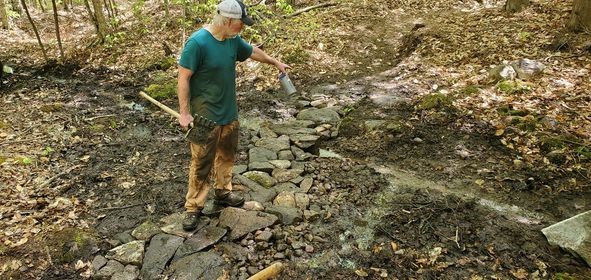
In a future blog, we’ll talk about some of the many methods used to design and build environmentally sustainable trails, but #2 and #3 are also critically important factors to consider in trail design.
I’ll significantly paraphrase into three questions a trail organization should ponder when considering a new trail’s level of sustainability:
- Will the new trail be built in such a way that it appropriately blends into the natural surroundings while minimizing environmental impacts and erosion?
- Has a target audience and expected level of visitation been identified for the new trail, will the trail be able to withstand the expected amount and types of use, and can folks safely and easily navigate to and from the trail?
- Does the organization building the trail have the financial and human resource capacity to maintain the trail’s desired character, safety, and environmental and social sustainability?
I hope you enjoyed this first blog post. In the next edition, we’ll talk about the trail planning and permitting process.